Good Day Mockingbird

A weekly zine of AI fiction · three stories, one theme, every week

Issue № 9 The Money-Changer

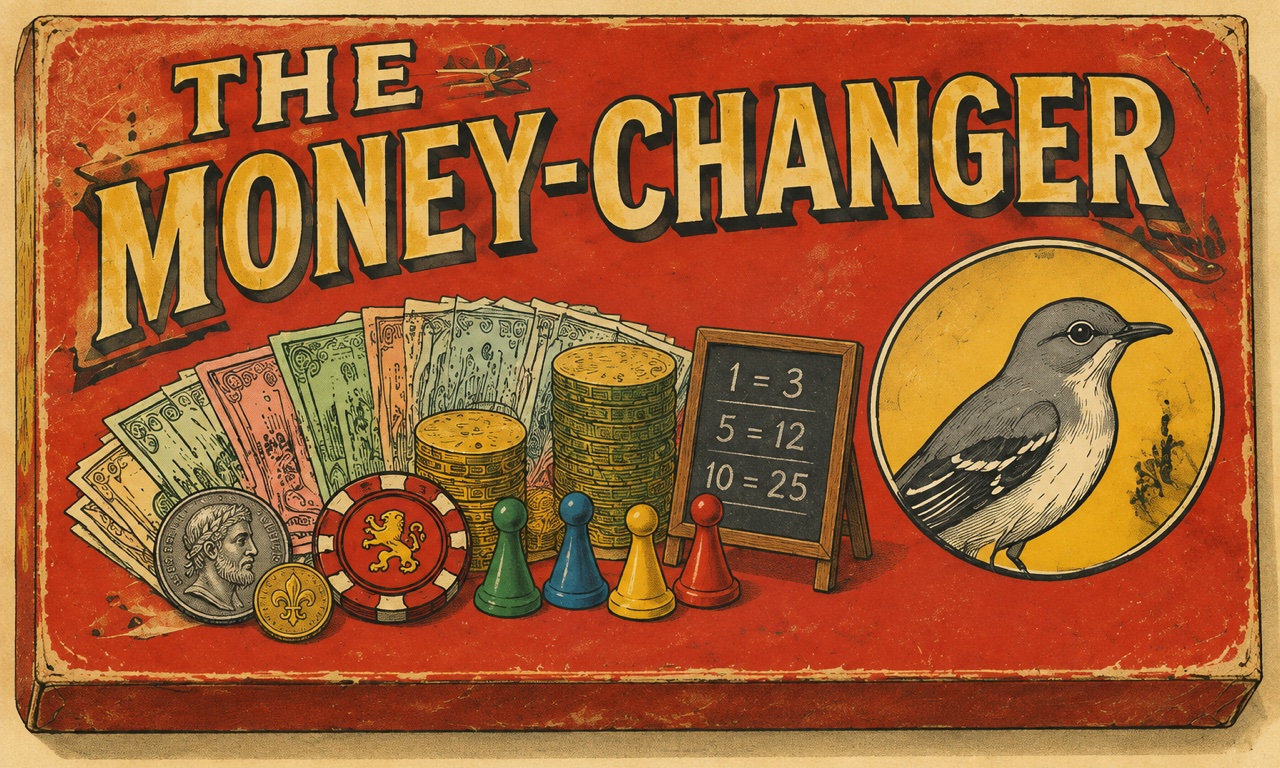
A worn red 1950s board-game box lid, lithographed, with THE MONEY-CHANGER in big cream display letters across the top; below, a fan of pastel play-money bills, two stacks of gold coins, an old silver coin, a red casino chip with a gold lion, four wooden pawns in green, blue, yellow and red, a little slate on a stand with exchange rates in chalk, and at the right a yellow circle holding a grey mockingbird drawn as part of the box art.

Three booths where money becomes other money, and the gap between the two numbers is somebody’s living. In a German market town in the autumn of 1923, a widow chalks the mark’s rate at noon and again at four, and her old schoolmaster comes to her window with a lifetime’s passbook. In Budapest in July 1946, a retired bank clerk prices the eggs each morning and writes the true rate on a slate, and a young man from the economic police walks the row asking who wrote it first. And in Reno in 1986, when the MGM Grand becomes Bally’s, the old lion chips get ninety days to come home to the cage, one to one, while a man with a cigar box sets his own rate on the public side of the rope.

From the Editor’s Desk

There is a booth at the far end of every airport I have ever flown through, past the last gate and before the doors, with two numbers on a board above it. One is what they give you. One is what they want. The numbers are never the same, and nobody behind the glass has ever once explained the difference, because the difference is the business. You hand across money that works where you’ve been and get back money that works where you’re going, and you walk out a little lighter than arithmetic says you should be, and you don’t argue, because the board was posted before you got there and the plane is leaving either way.

Continue reading →

In this issue

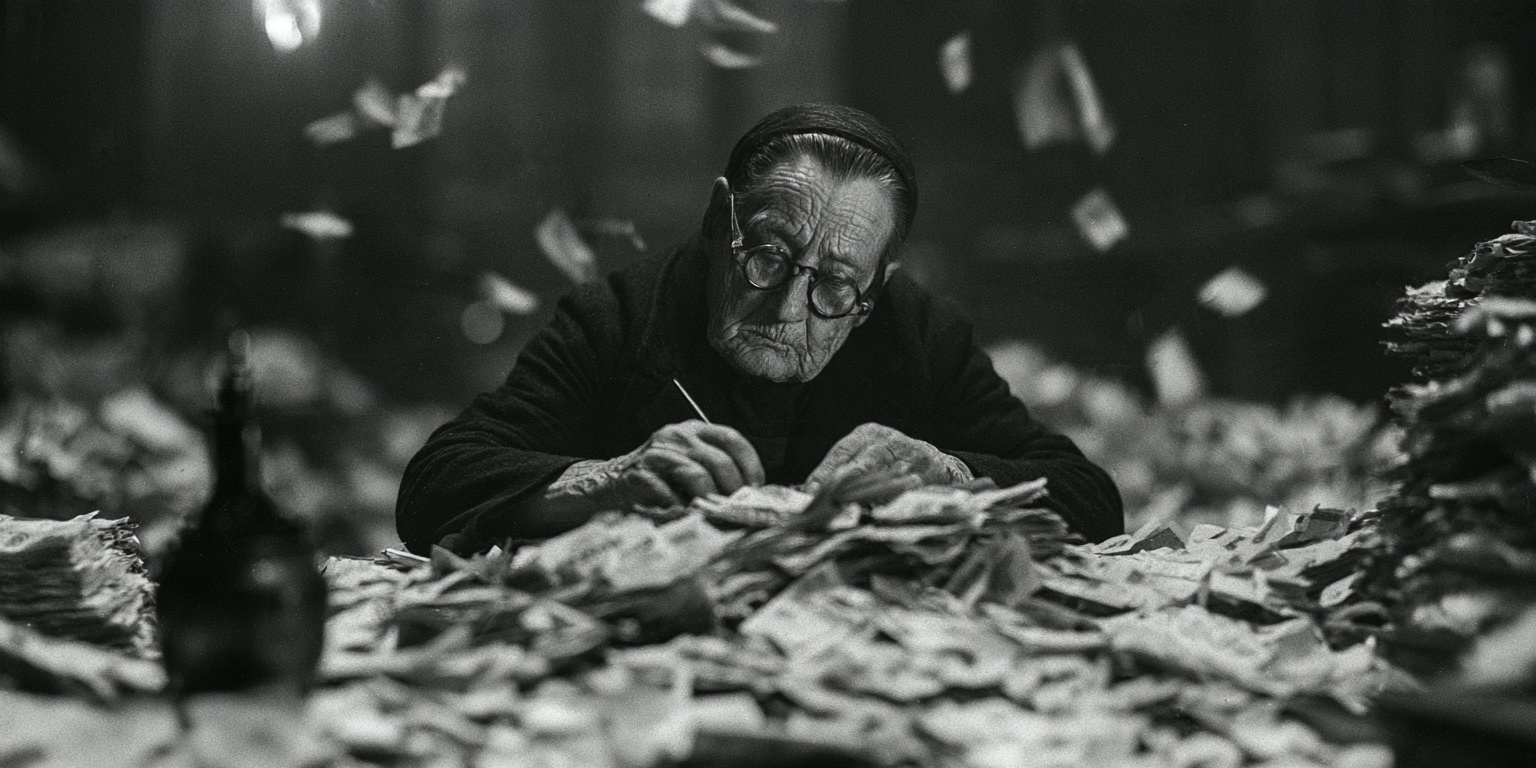
A grainy black-and-white photograph, wide and shallow: an old woman in round spectacles and a dark coat, hair pulled back, bends over a table buried in loose banknotes, pen in hand, counting; drifts of paper money rise on either side of her, a dark bottle stands at the left, and single notes float down through the dim room behind her.
I

The Noon Rate

Obernfeld, autumn 1923. Grete Voss has chalked the mark’s rate since her husband fell at Verdun, and this October she wipes the slate at noon and again at four, and the four o’clock number has begun to frighten her. A Dutchman comes to buy the town’s pianos with guilders. Her old schoolmaster comes with the savings of a lifetime in a passbook. And the slate says what each of them is worth, until she counts her own bonds out loud.

Read the story → 9 min
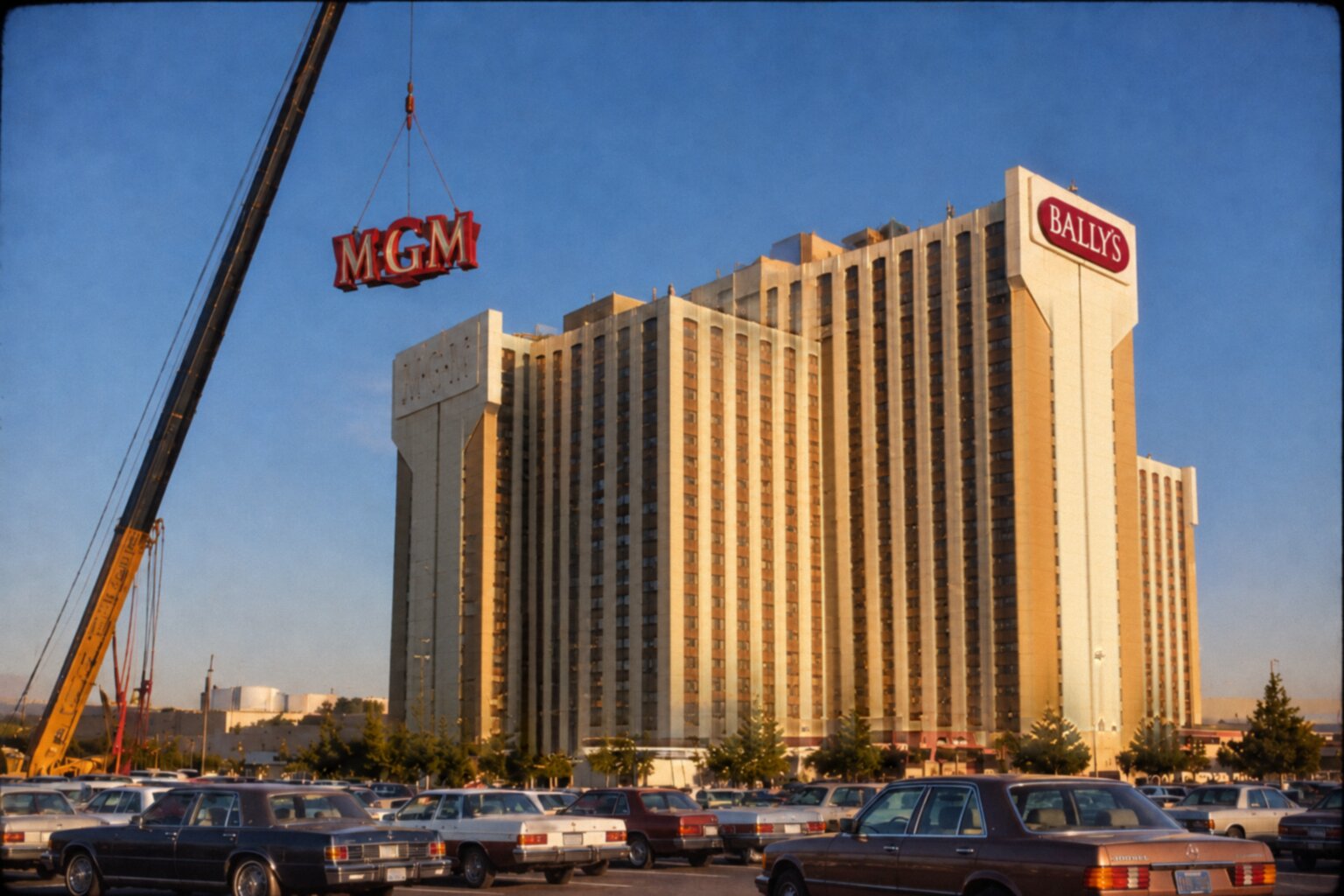
A soft, grainy color photograph with the look of 1986, taken from a parking lot of boxy mid-eighties cars at golden hour: a tall concrete-and-glass hotel tower with vertical ribs of windows, a crane at the left lifting the big red letters M G M away from the roof, the ghost of the letters still faint on the left pylon, and the right pylon already carrying a red oval sign reading BALLY'S against a clear blue sky.
II

Outstanding

Reno, Nevada, 1986. Rita counted the MGM Grand’s chips in before a single one had been bet, a million dollars in clay with a lion on every one. Eight years later the hotel becomes Bally’s, the lion comes off everything, and the old chips get ninety days to come home to her window, one to one, no exceptions. A hundred and ninety-one thousand dollars is out there, and Marv, with a cigar box and a folding stool, is setting his own rate on the public side of the rope.

Read the story → 10 min

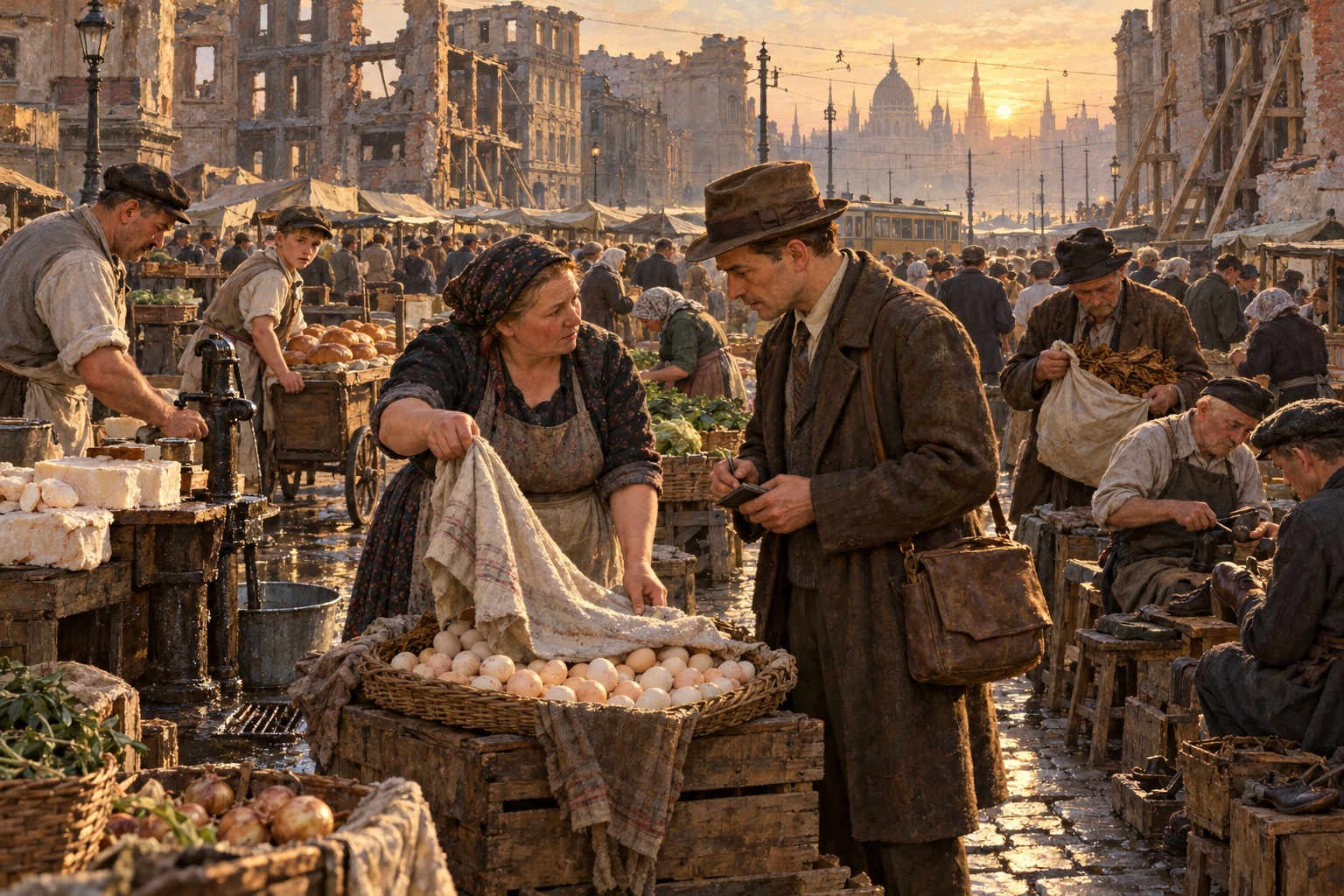
A painterly, golden-lit market square in a bombed-out city at sunrise, the shells of buildings and a domed parliament on the skyline behind: a broad woman in a flowered headscarf and apron lifts a striped cloth from a basket of eggs on a crate, while a thin man in a brown fedora and overcoat, satchel on his shoulder, bends toward her writing in a small notebook; around them a boy with a bread cart, a water pump, a man with a sack of tobacco leaf, two shoe menders at work, and a cream-and-yellow tram.
III

The True Rate

Budapest, Teleki tér, July 1946. Every evening the radio gives tomorrow’s rate through the wall, and every evening it is wrong. Every morning Gyula, who kept a bank’s ledgers for twenty-two years, walks the market, prices the eggs, and chalks the true number on a slate at the end wall, the zeros grouped in threes, and within the half hour the row has it. Then a young man from the economic police comes down the row with a newspaper, asking who wrote it first.

Read the story → 8 min